I partner with founders to build B2B startups from zero to one.

I started Infernotions in 2005 and became the GTM lead for Marketics Tech in North America. By 2008 the company had tripled its revenues and got acquired by WNS Global services. After this exit, I realized my passion wasn't in management, but in the messy, chaotic zero-to-one phase. In 2009, I launched Infernotions Tech as a launchpad for B2B SaaS innovation. We had some misfires but the team successfully brought two major products to market: Claimsgator (Insurance Analytics) and Polytab Attribution (Marketing Tech), the latter of which was acquired in 2018.
Following a restructuring in 2020, I now operate Infernotions as a specialized consultancy to help founders navigate the early stages of growth. I typically come on board as a full-stack operator, taking on a role as an individual contributor to fill critical gaps in the startup's capabilities-suite.
Web & mobile application development; Algorithm development; Patent development; Product management.
Use case development; User interviews; Market sizing; Product-market fit assessment.
Sales & marketing process development; Marketing operations; Revenue growth; Direct sales; Pipeline management.
Seed capital investment; Pitch deck development; Funding proposals.
I have undertaken several more projects than the list below. I selected the following for two reasons. There is little to say about projects that died at the design phase, and some projects are covered by confidentiality agreements.
Problem: Company had a strong presence in the CPG sector with two marquee accounts achieved through founder relationships, but it needed to diversify customer-base and build a GTM strategy*.
What I did: I built a "land and expand" strategy around consultative sales on a high-impact, complex analytical project. This led to Marketics' first clients in retail, insurance and automotive sectors.
Outcome: Company revenues tripled from 2005-2008 and got acquired for $64M.
*My observation: To give credit to the leadership and the board, they brought me on to build a sales function that did not rely on founder magic and relationships. They built the company to sell and achieved that goal on their terms.
Problem: Insurance and warranty service providers rely largely on a trust based mechanism in processing claims and premium applications. The volumes are too large for every entry to be individually audited. An analytical process had to be developed that not only identified suspicious behavior, but also provided guidance to the audit team for follow-through. Especially in insurance, there are restrictions on what can be audited to avoid the appearance of bias. This was a design requirement.
What I did: I led the product development by sitting with the investigators at GEICO's New York office to understand current processes. For warranty processing, I sat with the claims processing teams at Epson America. We built an analytical SaaS platform to isolate suspicious activities in inbound policy applications (for insurers), and for claim applications (for warranty processors). The product was marketed as Claimsgator fraud analytics.
I also wrote the claims for a patent application to identify nefarious behavior in trust-based networks, to protect our intellectual property. The patent was granted.
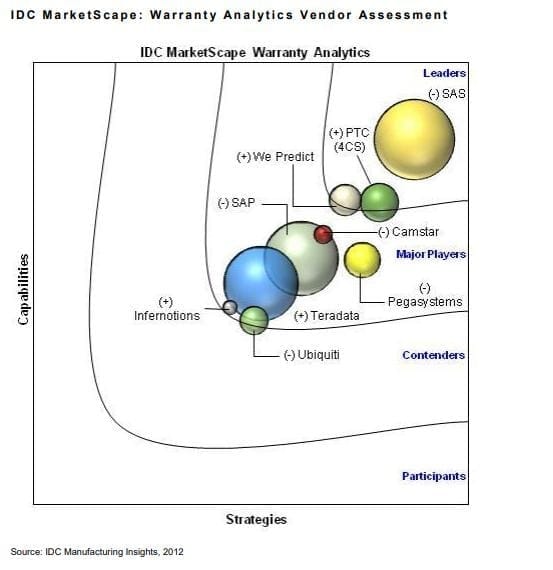
Outcome: At its peak, Claimsgator was deployed at GEICO and Progressive Insurance. It was also in used by two major warranty processors. We were also profiled by IDC as major player in Marketscape for warranty analytics. However, the user interface never took off with users. We were delivering value but largely as a services function. I decided to shutter the product once Polytab Attribution product took off. We used some of our learning from Claimsgator, especially in data management, for the Polytab product.
Problem: Marketers lacked visibility on the impact of marketing investment on sales. Investment was weighted towards Google and to last-touches prior to sale. Notably, display advertising was a blackbox, with customers paying for display marketing to acquire customers, but lacking measures of accountability. E-commerce managers also complained that their investment into online marketing led to offline sales (in-store or on phone), but they did not get duly recognized for their contribution to the merchant's topline growth.
What I did: I did the market research, managed the product development and the business development. I also designed the attribution algorithm to dynamically assign differential weight to a marketing touch based on its position on the path to sale. I also designed the process for analytically calculating the impact of online marketing to offline sales.
I led the direct sales effort with a team of three SDR's for outbound calls, and marketing the product at tradeshows (Etail West, IRCE and Shoptalk).
Outcome: By 2017, Polytab was in use at several of the top 100 Internet retailers in North America. However 2018 had two critical events that affected our growth trajectory - the Cambridge Analytica scandal and the GDPR launch. These events led to a major shift in our data sharing partnerships with Google and Facebook. Our technology needed to be overhauled. Instead of going through another 1-2 years of development and uncertainty I decided to exit with a technology sale to an agency in 2019.
Problem: Greenhouse operations have a problem with containing fungal infections. The air is moist and greenhouses often do not get sufficient direct sunlight. Spores do not dry out. If ventilation is compromised, the fungal infection can afflict the entire crop. Powdery mildew is one of the common fungal infections. While radiation can be used to treat the crop, it affects product quality. Ideally the growers would like early detection of the disease before the spores spread. This is the problem I set out to solve.
What I did: I led the market research with commercial greenhouse operations around Ontario. I set up a partnership with Niagara College's training program to conduct research in their facilities. I also partnered with a private grow operation to set up test and control environments, so as to separate the characteristics of infected plants from the healthy ones. I designed the handheld scanner to capture the multispectral signature of a plant's leaf to assess for mildew incidence. I also guided the analytical processes for parsing the diseased crop's signature from the control.
Outcome: The initial results were promising. I was able to tell an infected plant from a healthy plant using the spectral signature of a leaf. However, in 2019, my contacts shared that the cannabis sector, the industry I had as target market, was 6-12 months away from a major stock market correction. The problem I was addressing was important, but the market focus was moving away from growing crops to consumer edibles. Money was drying up. I had put the project on hold, and shuttered it through the pandemic with an asset sale to local growers.
Testimonials about Polytab attribution analytics. Videos are linked to the respective titles.

Polytab gives me competitive data I could not get through Google Analytics... It fills the blind spots.

Polytab guides our marketing strategy. For example, we audited our display vendor to see a lot of their impressions were remarketing and not prospecting which is what we were paying them for.
I follow two fundamental design principles when taking products from concept to commercialization.
To illustrate - Claimsgator was a B2B Saas product from the Infernotions stable for warranty/insurance claim analytics. In under two years, I took the product from concept to sales across the Americas. The product was profiled in 2012's IDC Marketscape under the "Infernotions" banner.
Building something big? Let's talk.